Quick Charge 2.0, MediaTek Pump Express 1.1, Quick Charge 3.0, HUAWEI Fast Charge, MediaTek Pump Express 2.0, HUAWEI Super Charge
Display
none
Protection
overheating, overload protection, short circuit
Additional Information
Housing Material
plastic
Package Contents
documentation
Description
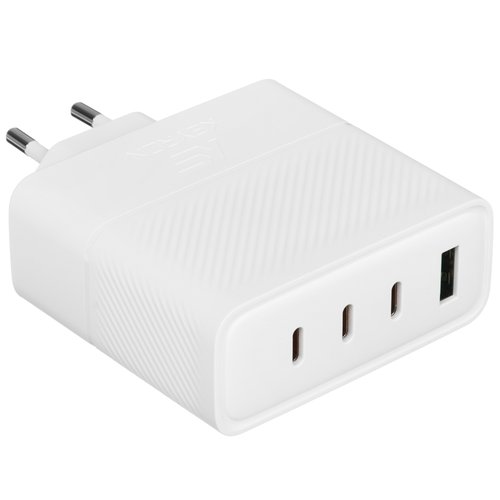
The KEYRON K100A3CQCPDGaNW wall charger is made in a compact black housing and features one USB Type-A and three Type-C ports supporting HUAWEI Fast Charge/Super Charge, MediaTek Pump Express 1.1/2.0, and Quick Charge 2.0/3.0 fast charging standards. The 100 W output power and 3 A current ensure a full charge for a smartphone in approximately 30-40 min. Thanks to its high power, the device is suitable for charging laptops.
The KEYRON K100A3CQCPDGaNW wall charger utilizes GaN technology, where gallium nitride is used instead of silicon, reducing energy loss and eliminating device heating during fast charging. The cable for connecting mobile devices must be purchased separately. It is important to ensure that the cable specifications match this charger. To prevent damage to the charger and connected mobile devices, its design includes protection mechanisms against overload, overheating, and short circuits.