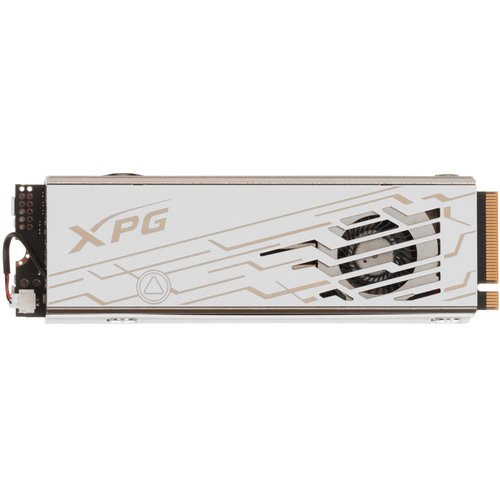
Characteristics 1000 GB M.2 NVMe Storage ADATA XPG MARS 980 PRO [SMAR-980P-1TCI]
General parameters
Type
SSD M.2 drive
Model
ADATA XPG MARS 980 PRO
Manufacturer Code
[SMAR-980P-1TCI]
Basic characteristics
Storage Capacity
1000 GB
Form Factor
2280
Physical Interface
PCIe 5.0 x4
M.2 Socket Key
M
NVMe
yes
Drive Configuration
Controller
Silicon Motion SM2508
Bits Per Cell
3-bit TLC
Memory Structure
3D NAND
DRAM cache
yes
Speed Indicators
Max Sequential Read Speed
14000 MB/s
Max Sequential Read Speed
10000 MB/s
Random 4KB Read (QD32)
1600000 IOPS
Random 4KB Write (QD32)
1650000 IOPS
Reliability
SSD Longevity (TBW)
740 TB
DWPD
0.41
Additional Information
Features, Additional
MTBF (mean time between failures) up to 2,000,000 hours
Dimensions
Length
80.5 mm
Width
24.2 mm
Thickness
11.2 mm
Weight
30.3 g
Description
The 1000 GB M.2 NVMe SSD ADATA XPG MARS 980 PRO [SMAR-980P-1TCI] with a PCIe 5.0 x4 interface provides sequential read and write speeds of up to 14,000 MB/s and 10,000 MB/s. This allows programs and files to open instantly and large volumes of data to be copied without long waits. The model features a DRAM buffer, ensuring that performance does not drop during prolonged data writing. The drive's capacity is 1000 GB: it is sufficient for installing games, work and creative software, as well as storing photos, videos, and music. \nUp to 740 TB of data can be written to the 1000 GB M.2 NVMe SSD ADATA XPG MARS 980 PRO [SMAR-980P-1TCI] over its entire lifespan. The mean time between failures is up to 2,000,000 hours: this figure was established during testing of a large batch of drives. The model is equipped with a heatsink and a fan that cool the components to maintain operating speeds under intensive workloads.